
The image below is a great illustration of how the blockchain distributed ledger works. Connect with our tutors online and get step by step solution of this question. Equations can be simple, like linear equations, or complex, such as polynomial and differential equations. An Equation Calculator simplifies the process of solving these equations by providing instant solutions with step-by-step explanations. Track both the cash you receive and the liability you now owe, forgetting the loan payable is a common mistake.
- Also, it is the primary source for generating the company’s trial balance and financial statements.
- Other names used for this equation are balance sheet equation and fundamental or basic accounting equation.
- Department heads often have ROA-linked incentives to encourage asset efficiency across the organization.
- The three key components of the accounting equation are assets, liabilities, and equity, each playing a vital role in the overall financial structure of a business.
- The formula defines the relationship between a business’s Assets, Liabilities and Equity.
- In your normal checking account, credits usually refer to money increasing in your account, and debits usually refer to decreasing the money in your account.
Understanding Basic Accounting Concepts: A Guide for Beginners
While they may seem similar, what is the accounting equation? the current portion of long-term debt is specifically the portion due within this year of a piece of debt that has a maturity of more than one year. Includes non-AP obligations that are due within one year’s time or within one operating cycle for the company (whichever is longest). Notes payable may also have a long-term version, which includes notes with a maturity of more than one year.

Free Cash Flow = Cash from Operations – CapEx
As the company pays off its AP, it decreases by an equal amount in the cash account. Inventory includes amounts for raw materials, work-in-progress goods, and finished goods. The company uses this account when it reports sales of goods, generally under cost of goods sold in the income statement.

Return on Equity (ROE)
Alternatively, companies may shorten the time it takes to collect sales made on credit. Companies also have different guidelines on which investments are considered capital expenditures, potentially affecting the computation of FCF. Meanwhile, investors will likely consider investing in companies that have healthy free cash flow profiles, which should ultimately lead to promising futures. Combined with undervalued share prices, equity investors can generally make good investments with companies that have high free https://prestamosrapidos.pro/bar-cpa-exam-how-to-calculate-fixed-variable-and/ cash flow. Investors greatly consider FCF compared to other measures, because it also serves as an important basis for stock pricing and the ability to service debt.


Alternatively, ROE can also be derived by dividing the firm’s dividend growth rate by its earnings retention rate (1 – dividend payout ratio). The return on assets ratio reveals how efficiently a company converts its investments into profit. ROA enables investors and managers to assess operational performance, compare companies within the same industry, and identify whether a business model is asset-intensive or asset-light. Quite simply, either you are crediting money or debiting money to the overall balance. In bookkeeping texts, you will see debits abbreviated as “Dr.” and credits abbreviated as “Cr.” Since the purchase is made on credit (rather than cash), the business incurs an obligation to pay the supplier in the future.
- A balance sheet tells you how strong or stretched a company’s finances are.
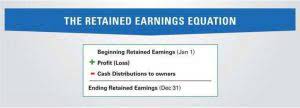
- The RE balance may not always be a positive number, as it may reflect that the current period’s net loss is greater than that of the RE beginning balance.
- As one of the three core financial statements, the balance sheet is used to assess a company’s financial strength, liquidity, and capital structure.
- A general ledger summarizes all the transactions entered through the double-entry bookkeeping method.
- This version breaks down equity further into components such as common stock, retained earnings, revenues, expenses, and dividends, allowing for a more detailed analysis of financial performance.
Frequently Asked Questions
Its purpose is to show what the business owns, what it owes, and the value of owners’ equity. This helps investors, lenders, and leaders assess performance, funding needs, and overall financial strength. The balance sheet helps you evaluate a company’s financial stability, compare performance with peers, and assess how efficiently the business manages its resources. It also supports deeper analysis when used together with the income statement and cash flow statement. In financial modeling, it’s necessary to have a separate schedule for modeling retained earnings.
One key characteristic is the concept of double-entry bookkeeping, which requires that every financial transaction affects at least two accounts. This method not only helps maintain balance but also ensures that all financial activities are accurately represented. The claims to the assets owned by a business entity are primarily divided into two types – the claims of creditors and the claims of owner of the business. In accounting, the claims of creditors are referred to as liabilities and the claims of owner are referred to as owner’s equity.
Paying business expenses, such as rent or utilities, decreases cash (an asset) and reduces retained earnings, which is part of equity. Even as the business spends money, the accounting equation remains in balance. The expanded accounting equation breaks down equity further, showing how it is impacted by common stock, retained earnings, revenues, expenses, and dividends. This provides a more detailed view of how these factors influence a company’s financial position. The accounting equation ensures that a company’s financial statements are accurate and balanced, which is crucial for effective financial management and reporting. All assets owned by a business are acquired with the funds supplied either by creditors or by owner(s).
Exploring the Purpose of Accounting for Business Success
If depreciation expense is known, capital expenditure can be calculated and included as a cash outflow under cash flow from investing in the cash Purchases Journal flow statement. This is the value of funds that shareholders have invested in the company. When a company is first formed, shareholders will typically put in cash. Cash (an asset) rises by $10M and Share Capital (an equity account) rises by $10M, balancing out the balance sheet.